
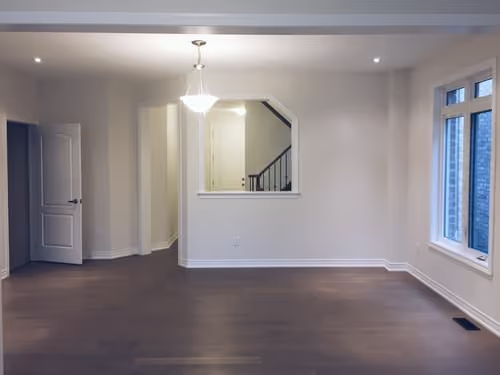
Taller base, proper casing and a built-up crown do more for a room than another coat of paint. Here is what actually makes trim read as expensive.
People walk into a well-trimmed room and describe it as warm, or finished, or solid. They almost never say 'the baseboard is seven and a quarter inches instead of three and a quarter.' But that is usually what they are reacting to.
Proportion is the whole game
Builder-grade base is short because short is cheap. In a room with nine-foot ceilings a three-inch base looks like a stripe of paint at the floor line. Move to a five or seven-inch profile and the wall suddenly has a bottom — the room reads as built rather than assembled.
The same logic applies upward. Crown molding gives the ceiling an edge, and in a tall room a single small crown looks stranded. Built-up profiles, where two or three pieces stack into one heavier detail, are how you get scale without paying custom-milling prices.
Consistent reveals are what your eye is actually reading
The reveal is the small step of jamb left visible where casing meets the door frame — usually a quarter inch. When it is consistent on every opening in a house, everything looks deliberate. When it wanders between an eighth and a half inch, the house feels slightly wrong in a way most people cannot name.
This is the single most common tell of rushed trim work, and it costs nothing but attention to get right.
Coped corners, not mitered ones
Inside corners in a real house are never exactly ninety degrees. Miter two pieces of base at forty-five and the joint opens as soon as the wood moves or the wall proves to be out of square.
A coped joint — where one piece is cut to the profile of the other and slides over it — absorbs that movement. It takes longer to cut and it is the reason good trim still looks tight five years later.
Scribing beats caulking
Floors in older Knoxville homes are rarely flat. You can either scribe the base to follow the floor, or you can run it straight and fill the gap with caulk. Caulk shrinks, cracks and telegraphs the shortcut. Scribing takes a bit more time and disappears entirely.
Where to spend if the budget is limited
If you can only do part of a house, do the rooms people stand still in — the living room, dining room and entry. Hallways and bedrooms can wait. And prioritize base height over crown; a taller base changes a room more per dollar than crown does, and it is easier to add crown later.
One more thing worth knowing: trim is one of the few upgrades that is genuinely hard to tell apart from original architectural detail once it is painted. Done properly, nobody will guess it went in last spring.